

Electrical safety at home
Electrical safety is everyone’s responsibility. Find essential information and resources to keep your home safe.
Electrical safety is important
Safety underpins everything we do. While we’re doing our part to ensure community, there are some steps you can take to at home.

Emergency and customer support numbers
- In an emergency: call Triple Zero (000)
- Bushfire information line: 1800 NSW RFS (1800 679 737)
- Call the SES for emergency help in storms and floods: 132 500
- Endeavour Energy emergency line: 131 003
Call us if you lose power, see fallen or sparking powerlines, leaning or fallen power poles, exposed underground cables or damaged substations, kiosks or pillars.
What to do if someone receives an electric shock
It's important that you know how to respond if someone receives an electric shock.

Do not rush in
Instinctively, we often want to rush in and act immediately. However, it’s possible for people attempting rescue to get secondary injuries. Take a moment to assess the situation before attempting to help
Ensure your own safety
Be especially careful if there are live wires, or if the surrounding area is wet, as electricity will conduct through water
Switch the appliance off if possible
Without touching the injured person or the appliance, immediately switch the appliance off at the power point
Get help immediately
Call 000 for an ambulance, then administer basic first aid
Apply CPR if needed
Once you are sure the power is off, and the person is unconscious, apply CPR immediately
If the person is conscious, they will need to be monitored closely until the ambulance arrives
Help them lie still and keep them warm with a blanket; and remember it is possible to appear uninjured after receiving a severe electric shock but still suffer a heart attack or go into shock hours later
Make sure they are seen by a medical professional
Attend to burns
The patient may have substantial burns to parts of their body, including internal burns
Generally, burns are present where the electricity has entered and exited the body, which is usually the hands and feet. Keep the person covered with a blanket but apply a clean, cool, damp cloth, or cold gel pack to each of the burn areas
Report the issue
Storm safety
Storms, high winds and lightning cause considerable damage to electricity infrastructure, from falling trees to debris being thrown through the air like missiles. Each year at Endeavour Energy, we prepare our network for storms and high winds by making sure vegetation is maintained and kept clear of our network. While we do all that we can there are a few steps you can take to keep you and your family safe during the storm.
Before the storm season
During a storm

Tidy up loose items like garden furniture and building materials that can become airborne in strong winds and cause damage to property and powerlines
Seek shelter and do not go outside into the storm
Clean your gutters and check the roof for broken tiles and leaks. Use extreme caution when working near the powerline point of attachment
Turn off and unplug sensitive electrical appliances such as computers, televisions and charging phones
Manage trees and shrubs growing near powerlines
Listen to your radio for storm updates (portable radios, car radios or on your mobile phone)
Keep a battery-operated torch, radio and spare batteries handy, or download the torch app on your phone
Always stay at least 8 metres from any fallen powerlines
Ensure outdoor electrical appliances are turned off at the power point and stored in a dry location where they will not get wet
Report any fallen powerlines and power outages to Endeavour Energy on 131 003
Know the location of your fuse box and main switch (there may be more than one). Make sure it’s covered to prevent water damage
See our website and socials for power outages and estimated restoration times
Before the storm season
Tidy up loose items like garden furniture and building materials that can become airborne in strong winds and cause damage to property and powerlines
Clean your gutters and check the roof for broken tiles and leaks. Use extreme caution when working near the powerline point of attachment
Manage trees and shrubs growing near powerlines
Keep a battery-operated torch, radio and spare batteries handy, or download the torch app on your phone
Ensure outdoor electrical appliances are turned off at the power point and stored in a dry location where they will not get wet
Know the location of your fuse box and main switch (there may be more than one). Make sure it’s covered to prevent water damage
During a storm
Seek shelter and do not go outside into the storm
Turn off and unplug sensitive electrical appliances such as computers, televisions and charging phones
Listen to your radio for storm updates (portable radios, car radios or on your mobile phone)
Always stay at least 8 metres from any fallen powerlines
Report any fallen powerlines and power outages to Endeavour Energy on 131 003
See our website and socials for power outages and estimated restoration times

Make sure you have a Power Outage Plan in place, so you know what to do if the lights go out.
Bushfire safety
Bushfires have a devastating impact on people and their communities. Endeavour Energy is responsible for reducing the risk of our network to ensure our customers and communities stay safe. Help reduce the risk to yourself and the people in your home by making preparations before bushfire season. You should also make a Bush Fire Survival Plan and ensure everyone in your household understands your plan, noting that long power outages are more likely to occur in bushfire weather.
Prepare for a bushfire season
Prepare and maintain your emergency kit
Clear your roof gutters and keep your property tidy to minimise fuel around your home
Keep a battery powered AM/FM radio with spare batteries
Make sure you know how to manually operate electric garage doors, gates, as well as locks and practice how to do it
Have a torch and spare batteries ready
If you have petrol or diesel water pumps and generators, test them and carry out any required maintenance
Keep a powerbank charged for your mobile phone
If you have vegetation growing near powerlines connecting to your home, contact a professional to see how you can have this trimmed
Visit sesemergencyplan.com.au for more information about creating your emergency plan
Prepare for a bushfire season
Clear your roof gutters and keep your property tidy to minimise fuel around your home
Make sure you know how to manually operate electric garage doors, gates, as well as locks and practice how to do it
If you have petrol or diesel water pumps and generators, test them and carry out any required maintenance
If you have vegetation growing near powerlines connecting to your home, contact a professional to see how you can have this trimmed
Prepare and maintain your emergency kit
Keep a battery powered AM/FM radio with spare batteries
Have a torch and spare batteries ready
Keep a powerbank charged for your mobile phone
Visit sesemergencyplan.com.au for more information about creating your emergency plan
Bushfire smoke can act as a conductor of electricity, which means power sometimes needs to be turned off to keep our communities safe.

High fire danger days
Fire danger ratings describe the potential level of danger should a bushfire start and are calculated using a combination of weather forecasting and information about vegetation that could fuel a fire.
High fire danger day preparation
- Check your bush fire survival plan
- Make sure you know how to manually operate electric garage doors, gates and locks
- Keep electric vehicles charged, if you can
- Charge up mobile phones and devices, as well as power banks
- Monitor fire warnings through the Rural Fire Service or the Hazards Near Me app
- Report electricity supply interruptions through our website or call 133 718
- Treat all powerlines as 'live' and dangerous, by keeping at least 8 metres away from any low or fallen powerlines. Never drive across fallen powerlines
If you see a fallen or damaged power line, call Endeavour Energy on 131 003, or call 000 if the situation is life-threatening.
Vegetation management
With thousands of kilometres of underground and overhead cables, the management of trees and other vegetation near power lines is an important part of maintaining our network. You are responsible for keeping trees that grow on your property, a safe distance from the electricity service line that runs from the street to your house.
Planting trees near powerlines
Large trees planted underneath powerlines pose significant challenges for Endeavour Energy, particularly species that are not suitable for pruning.
Please think carefully about the suitability of trees before planting in close proximity to powerlines. By selecting appropriate plants for your property, you can reduce the need for pruning and save yourself both time and money.
Who is responsible for managing trees near powerlines?
The image below shows some common examples of the responsibility of private property owners in relation to managing trees near service lines. Notably, that:
- You are responsible for keeping trees that grow on your property, a safe distance from powerlines
- If vegetation on your neighbour’s property is within safety clearances of your service line, we will take steps for the encroaching vegetation to be pruned
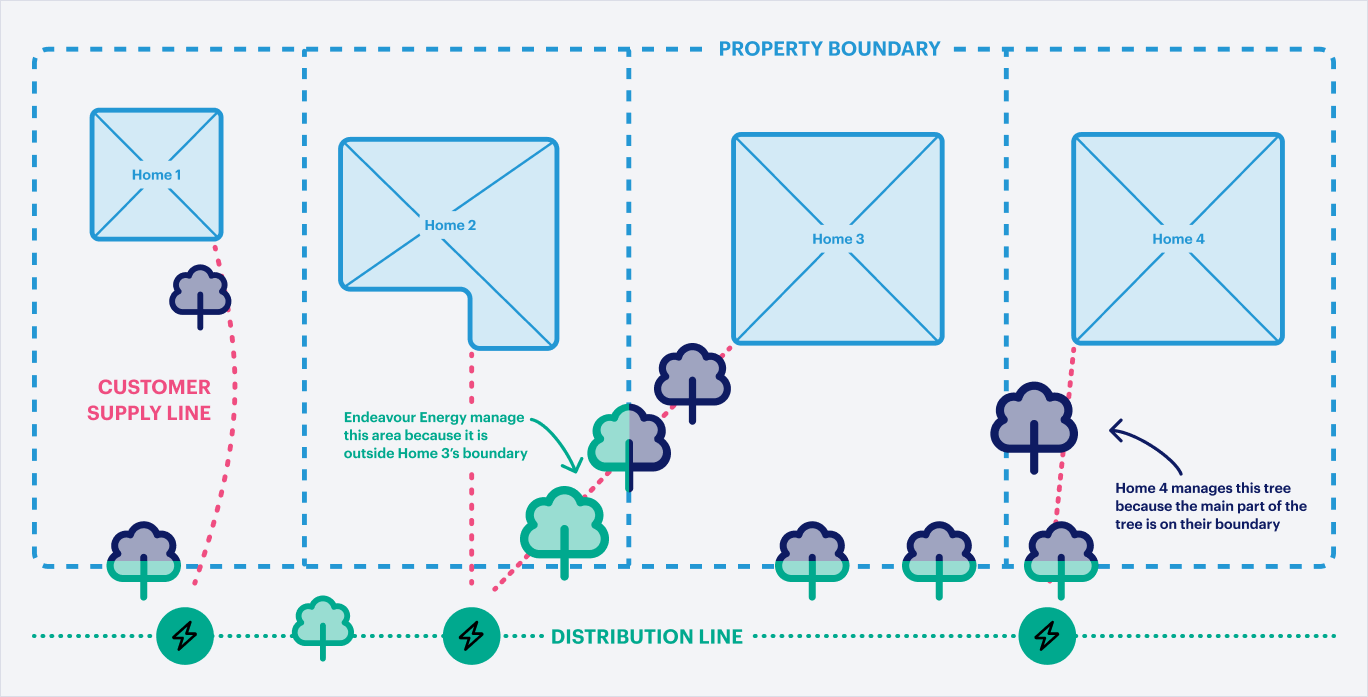
By allowing the trees on your property to come into contact with powerlines you could be legally responsible for any damage.
Our standards require that your trees are at least:
- Half a metre away from insulated service lines
- Two metres away from uninsulated service lines
In designated bushfire prone areas, add another half metre to the distances stated above for all overhead lines other than low voltage insulated service lines. Under current practices, homeowners and occupiers are required to keep trees on their property, a safe distance from powerlines all year round.
As part of our routine inspections, we will notify of defects that are found during inspections carried out on powerlines. This process involves a written notification of the defect to the customer, appropriate follow up correspondence and re-inspection on an audit basis on advice from the customer that the defect has been remedied. If the defect is not remedied in accordance with the notice, Endeavour Energy has procedures in place that can ultimately lead to your disconnection from our network.

Trimming trees safely
Working near powerlines is dangerous and specific control measures must be employed in accordance with the NSW WorkCover Code of Practice for Overhead Powerlines.
You cannot trim your trees yourself if:
- The tree or branch to be pruned is closer than three metres to any powerline
- Any part of your body or equipment comes within three metres of any powerline
- The tree or branch is above your service line.
Should you ever need to trim or remove trees, we recommend that you have the work done by an accredited contractor with a minimum of Certificate II ESI Powerline Vegetation Control from a Registered Training Organisation.
You should also remember that you may need approval from your local council before trimming is undertaken.

